

As Americans prepare for the holiday season, the news of the UnitedHealthcare CEO’s passing appears to be the gift that keeps on giving. From the comfort of their overpriced dwellings, citizens look on with wondrous amazement as law enforcement officials announce the capture of the nation’s latest anti-hero: the man responsible for ending the life of health insurance tycoon Brian Thompson.
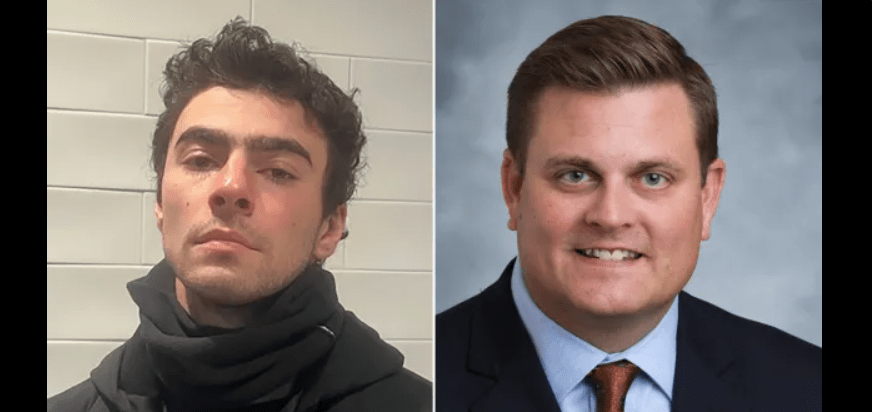
Thompson’s company UnitedHealthcare is accused of using artificial intelligence technology to systematically deny health insurance claims for its millions of customers. The case has become somewhat symbolic as a story of vengeance against a cruel system of injustice against the American people. Or at the very least, as a symbol of one man’s righteous indignation and immovable will to even the proverbial score.
With every passing minute there is an explosion of new commentary and information about the life of the alleged perpetrator. Luigi Mangione, a 20-something, ivy league tech graduate from a wealthy family, is not at all what people expected. In fact, by just about every conventional marker he appears to be the exact kind of person who would benefit from our current socioeconomic model.
Luigi Mangione was an avid reader and book reviewer. Here is what I think are the most profound takeaways from his review of Industrial Society and Its Future, also known as the Unabomber Manifesto:
- “Violence never solved anything is a statement uttered by cowards and predators.”
- “Peaceful protest is outright ignored. Economic protest isn’t possible in the current system.”
- “When all other forms of communication fail, violence is necessary to survive.”
Such powerful words from someone so young. Though his mindset ultimately led him to a place of committing a grave crime against another human, it’s clear that Mangione’s frustrations echo some of the very sentiments shared by Americans across the country.
Afterall, many hundreds of thousands of disempowered young people are finding themselves unable to fight against systemic issues such as the high cost of living, the impossible job market, the unattainable housing market, rising healthcare costs, climate change, etc. I believe that there is a lot of truth in Mangione’s claim about economic protest being damn-near impossible.
In fact, Gen Z—the same generation that is currently being called lazy, worthless employees—are perhaps the only generation capable of an economic boycott. With fewer commitments and responsibilities, they have come to be known for cultural phenomena like quiet quitting or leaving the workforce altogether.
I hope I can discuss this topic a bit more in a future video because I think it’s truly fascinating. And I believe that the young people of today will be the greatest agents of change in our society, leading the charge against inhumane systems of oppression.
In these modern times, it would be extremely difficult for a person to openly condone political violence and still be taken seriously. However, Mangione’s actions are a constant reminder of where we’ve come from as a country.
In a recent article I discussed the mythical American Dream and the origin stories that came to shape our current understanding of American cultural values. One of them being the Boston Tea party, where early Americans protested unfair taxation from British colonial rule by not only boycotting British tea, but actively engaging in violent, destructive behavior. Destroying property, rioting, and rallying behind the motto “No taxation without representation.”
In other words, no more pouring into a system that does not nurture its people. These growing tensions between American settlers and British imperialists would eventually contribute to the onslaught of the American Revolution.

In the cultural vault, we can find no shortage of these kinds of stories of retributive justice. For example, we have John Wick, a kind-hearted-but-bad-ass retired hitman who goes on a quest to end a cocky, silver spoon fed mafia bro. By breaking into John Wick’s house, stealing his prized sports car, and harming his innocent puppy, the foolish thug places the final straw for grieving widower John Wick, who has nothing more to lose.
Then there’s the great Equalizer, an ex-marine and DIA officer whose story unfolds over several sequels. Though he appears to be an average man by day, the Equalizer is he who balances the scales by punishing the lurking villains of the night—perpetrators of romantic and gender based violence, traffickers, drug lords, thieves, and thugs of various sorts.
Among these films about complex protagonists carrying out vigilante justice, one in particular stands out as it pertains to the Luigi Mangione / UnitedHealthcare case: the movie John Q. Like the Equalizer, the protagonist is played by none other than actor Denzel Washington, whose signature no nonsense approach and unflappable nature makes for an iconic portrayal of a father pushed to the brink of desperation.
John’s 9-year-old son suffers from a life-threatening heart condition. The central plot point of the movie is the issue of his family’s dire financial circumstances. Already behind on their home and car payments, with very little savings, the family must make the impossible choice between a $75,000 down payment to add the boy’s name to the list for an available heart transplant or watching him pass away.
On top of that, John’s health insurance provider says they cannot cover the surgery. So, unable to come up with the money, and not ready to accept the inevitable passing of his kid, John takes his son’s doctor and several others hostage at gunpoint, demanding justice for his son. In a major act of defiance, John’s emotional plea to hostage negotiators resonates long after the film’s ending: “I am not gonna bury my son. My son is gonna bury me.”
It’s one of those bitter-sweet moments where art imitates life almost a bit too well. A triumph for the creators, but a tragedy for all those who recognize that pain.
So this is the framework in which Mangione currently finds himself. And it seems to be by design. With his careful manifesto and his own theatrical flourish, it’s clear that he wants to be seen by the American people in a certain favorable light. And, as he attempts to fit himself within a well-established cultural framework of vigilante justice, it’s clear that he wants to be remembered.
But this alleged life ender is not some sympathetic, salt-of-the-earth, working class hero father. Instead, he appears to be a young man of means. A former class valedictorian, well read and well educated. A young man of the wealthy, upper class echelon of society. Someone who suffered, himself, from a debilitating condition that caused him to live in chronic pain, spending countless hours researching ways to heal.
And yet still privileged enough to settle himself down in sunny Hawaii for a long period of convalescence. No, he doesn’t look like the kinds of complex protagonists we are used to. But in many ways, that doesn’t seem to matter much at all.
What matters most, it seems, is what happens in the space between head and heart. What happens there in the profound silence as Americans try to reconcile that which we know to be illegal and morally-wrong, and that which is technically legal but also morally-wrong.
Yes beneath the fanfare and the mystery and the lore of the UnitedHealthcare case, the real question is will Americans use the inertia of the moment to get the ball rolling on not only wishing for, but demanding structural change.
Just look at the outpouring of public support from all directions. Now that we have recognized that this disdain for our medical system stretches across racial lines, up and down the economic ladder, and from one end of the political spectrum to the other, how will we respond? Who should we hold accountable? And what might that look like?
It is my personal belief that America may just be on the cusp of truly knowing itself. And I think we are ready for a multi-party political system. Or a direct, one to one vote on bipartisan issues like these. Sadly, neither party seems willing or able to give the people what they want when it comes to a national healthcare. And as constituents, we’re left twiddling our thumbs wondering why come big daddy government don’t love us no more.
Why have other nations managed to achieve, with far less, that which we’ve been denied for so long?
Well, only time will tell how the American people will fare in our own development. Something tells me we’re finally starting to shed our need for approval. And we’re beginning to break free of the crippling obedience that has corralled us for too long.
Social niceties be damned! The young nation is entering its teenhood: biting sarcasm, chronic disdain, open rebellion, and all that comes with it.

